
Combii
Helping independent drivers coordinate their services.
Independent minibus drivers provide informal public transport in Mexico, across Latin America and Africa, and in many other parts of the world. They share routes but compete for passengers. I founded Combii to give drivers better information about nearby vehicles and help passengers see services approaching.

My roleFounder · Product development · Mobile and cloud engineering
In the product
The problem
For an independent driver, the gap to the next vehicle matters: arriving just behind another minibus can mean fewer passengers. Radio communication helps, but broadcasts do not give a clear picture of where everyone is. Passengers face the other side of the same problem: waiting without knowing where the next vehicle is.
My role
I brought together customer research, field pilots and product development, then built the mobile and cloud software. The work meant serving two groups with different needs, rather than treating the passenger app as a copy of the driver interface.
The solution
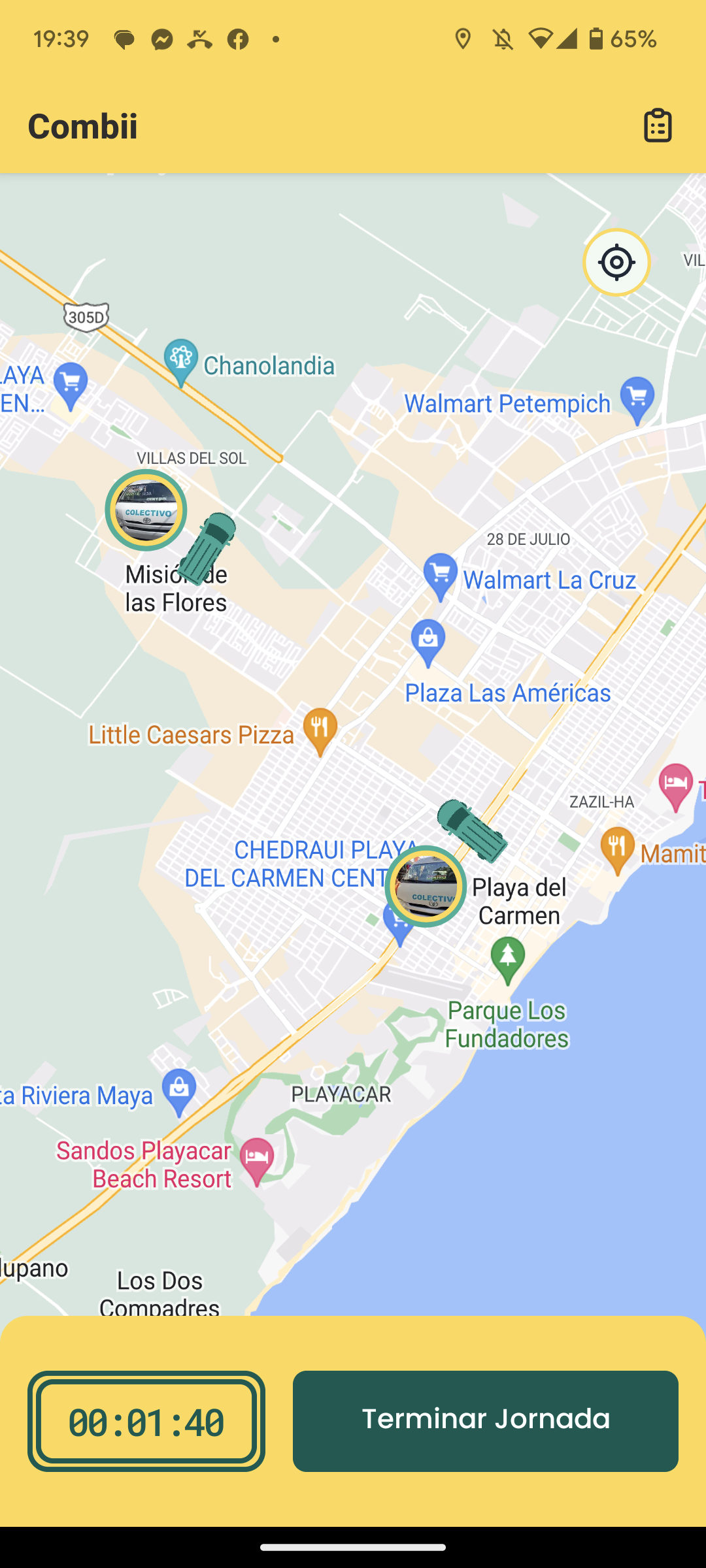
Combii has separate driver and passenger apps built on a shared React Native codebase and Firebase services. Drivers can see other vehicles, their distance and driving status, and exchange voice messages within groups. Passengers get a map of vehicle locations.
A central innovation is a Bluetooth-beacon approach to transient, real-time clustering. Nearby passenger phones provide proximity and location signals that can be aggregated into an anonymous cluster representing a vehicle. The aim is to make the vehicle visible without identifying the individual passengers travelling in it.
Privacy and anonymity shape this design: the passenger app supports anonymous sign-in, and Bluetooth beacons use randomly generated identifiers rather than names. I prototyped the clustering method to infer vehicle locations from these shared observations, so useful transport information can come from passengers collectively rather than relying solely on a driver sharing their position.
- Observe proximityPassenger phones detect nearby Bluetooth beacons and contribute location signals.
- Form a transient clusterRelated observations are grouped to infer a shared vehicle.
- Represent the vehicleThe cluster provides an aggregate vehicle location, rather than identifying individual passengers.
Current status
The product has been built and field-piloted, but has not yet established an active user base. Payments and passenger wallets remain outside the implemented scope. The next challenge is adoption: finding a group of operators and passengers who will use the service together.
Explore further
Explore CombiiWorking on a product with several groups of users?
mark@rowan-cognitive.com